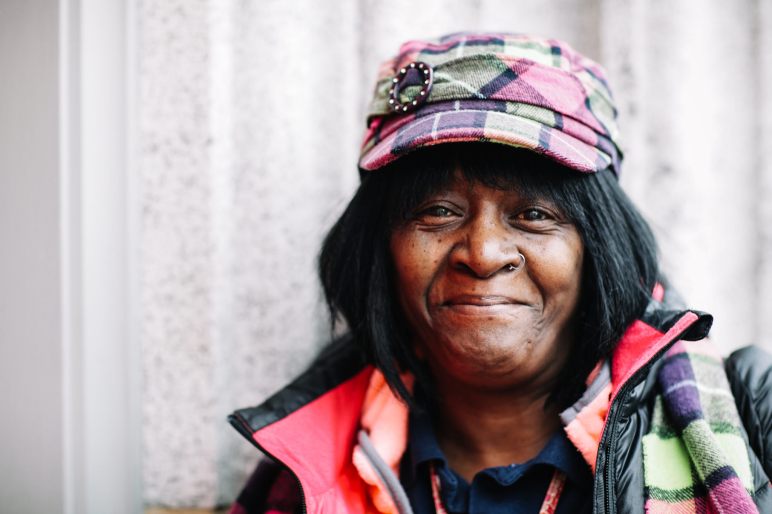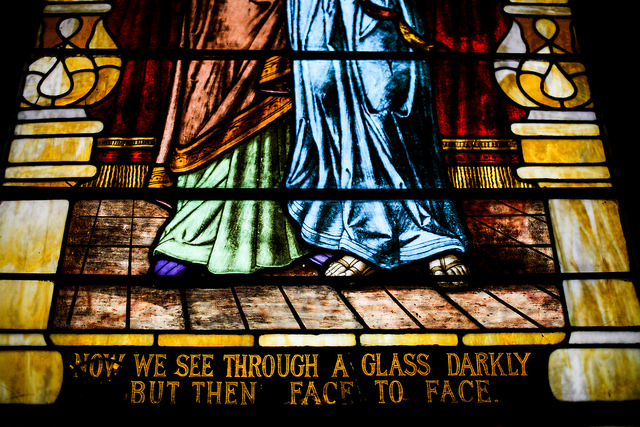
And they followed…

A Faith from the Margins to the Web bible study for Epiphany 3, Year B

Contributing Authors:  Lisa and Alisha

Give us grace, O Lord, to answer readily the call of our Savior Jesus Christ and proclaim to all people the Good News of his salvation, that we and the whole world may perceive the glory of his marvelous works; who lives and reigns with you and the Holy Spirit, one God, for ever and ever. Amen.

Mark 1:14-20
After John was arrested, Jesus came to Galilee, proclaiming the good news of God, and saying, “The time is fulfilled, and the kingdom of God has come near; repent, and believe in the good news.”
As Jesus passed along the Sea of Galilee, he saw Simon and his brother Andrew casting a net into the sea—for they were fishermen. And Jesus said to them, “Follow me and I will make you fish for people.” And immediately they left their nets and followed him. As he went a little farther, he saw James son of Zebedee and his brother John, who were in their boat mending the nets. Immediately he called them; and they left their father Zebedee in the boat with the hired men, and followed him.

“And they followed him!”

Unanimously, both Alisha and Lisa agreed this was the phrase that stood out to them.  Lisa, a regular at Friday’s Red Door lunch, had been living unsheltered for the past year.  Alisha, a student at the University, was eager and interested to hear Lisa’s story as she grew in her own life of faith.

Alisha expanded a bit on that idea of following, “I mean, they just left everything, they were like “ok, let’s go!”

Lisa nodded, “It reminds me that sometimes you just have to let things go, put it aside, be ready to follow.  I mean, everybody has family and everyone has problems, like I’m having one now with my mother. But we have to believe that if we take those problems to the Lord, and if we give them over to Him and follow Him, that He is there to lead us through.”

Alisha added, “to me, what caught my attention was that part when it ways ‘after John was arrested, then Jesus came.’  It reminds me that they had to realize that Jesus was the one person to follow. If they didn’t listen to John, now they knew they had to follow Jesus.  One thing happens, then the other.  It’s hard to do that, when you see problems arising in your life, like they saw everything happening there with John, and then to have to let go of everything and follow Jesus like the disciples did. It makes all the difference, though.”

Lisa spoke with honesty, “That is so hard to do! I’m sorry to say that…

Alisha interrupted her kindly, “Oh, no, you have no need to apologize! It is hard! It is really hard.  We are only human and we experience those times when we’re praying, we’re trying and it seems like just problem after problem in our lives. That’s when we are suppose to keep our faith and it’s when its the hardest, too. I read this thing one time that said, “Doubt your doubts” and that really spoke to me. I thought, I don’t need to doubt God. What I’m doubting is that sense I’m having that I somehow need to fix everything, or that everything has to all be OK before I can follow.”

Lisa said, “I’ve always liked that saying, ‘when one door closes, another opens…’ and I had a hard time believing that at first, but I’m starting to come around and see it now. Just because I don’t have a place right now…a “home” home…that doesn’t mean I can’t work or get a job. People tell you one has to come before the other but it wasn’t working that way for me.  I had to figure out what would work for me, to go through the process of thinking about what I could do and was being asked to do and now that I’m doing that, I really believe it.  Door close, but others open when we follow.”

Alisha was in agreement, “I know just what you mean! It’s like we are waiting, hoping for something better. And God is saying, ‘just wait; I have something wonderful planned for you, in fact its already happening’ but it’s still hard for us to believe it.”

Their conversation continued.  Lisa explained her own understanding of this passage, “I’m seeing God working right now in this Gospel in wanting to take care of those disciples.  It’s hard to follow but Jesus is wanting to take care of them, too. In my own life, I know that I am grateful to be still alive and I’ve learned that God provides for me what I need and when I need it.”

Alisha said the Gospel spoke to her as well, “It reminds me that I can be focused on all the little things that I want. But as you said, there are people who don’t have even big things I can take for granted: food, shelter, clothes, a jacket or something…sometimes getting what you really need is like finding blessings.”

Lisa related this to her own life, “Now that I don’t have any of the luxuries I once thought I needed, I’m grateful for what God does provide me in my life. It’s a hard lesson to have all that and then to lose it all. But God has been with me; I see God that way in my own life right now.”

Alisha spoke about where she saw God, “In this passage, I see God in that whole thing of following him. It’s one thing to go to church and listen, but another thing personally to decide ‘I’m going to follow you with my whole heart, even when troubles arise.’ In my life right now, I see God working in me trying to pray more and read the scriptures more, even if there aren’t a lot of people my age doing that. But, I’m not just doing that for me, or to make other people happy. I’m doing it to follow God.”

Lisa empathized with her, “I remember feeling that growing up. My family didn’t go to church much, and I didn’t really know a lot about God. But, ending up out here living on the street, often times we turn to churches and it has made me want to learn more about God, about what where and how God is leading me.”

Alisha asked, “What do you think this scripture is saying to us?”

Lisa responded, “I think it’s reminding us to just trust and believe in the Lord. If you don’t get your way, don’t throw a hissy fit and walk off. Maybe the thing we want isn’t the best thing for us. We want it all, we want to have it all perfect. We think “this has to be.” But it isn’t always the way it seems. Like for me, a couple weeks ago there was a job that I thought was perfect for me…a five minute walk, easy. But, I didn’t get it and then I was angry and disappointed. Then, just one week later, I got called about another job which is really wonderful, at the hospital. I didn’t think they would take me. But they did! I got that job and it is right up my alley. I start as soon as they process my paperwork.  I didn’t get what I wanted at first, but then another door opened and its one where I will get to help people.”

Alisha was genuinely happy to hear this, “What a blessing to see an example like that for you, not giving up but waiting and following and knowing God is working things out.”

Lisa offered another example, “I have been working for months to get into community college, too, to be a substance abuse counselor. There was a problem with my high school transcripts and I was ready to give up. But the admissions counselor there reminded me: don’t give up. I prayed, and I trusted God, and I kept going and being persistent. It worked out, and I didn’t give up. I’m going to be starting there in January, too!

Alisha was excited for her, “That’s so great!”

Lisa reflected a bit, “I think of it this way. I know how good it feels when someone notices you, speaks to you, reminds you that God is with you. So, I try to do that. I don’t walk past people. I stop and say hello, talk to them. I never knew how much that meant but now I know it means a lot. That is something I can always do.

“We need more people like that!” said Alisha, “People who can see others and remind them, we are all human, too.”

“I’ve tried to do that.” responded Lisa. “I think it’s a skill that I have and something that I’m called to do. People deserve to feel like human beings.”

Alisha was beaming: “You’re like a light! These people may feel like they’re in the darkness but you are a beacon of light, reminding them that to have that hope.”

She went on to reflect on her own life, “My own gifts and skills…well, I feel like God gave us a voice for a reason. I can be shy at times, but when I feel shy, I remember that God gave me a voice. If more people would raise their voices, and remember that God is with them and remind other people of that, the world would be a better place. So, I think a gift is to use my voice, to use the voice that God gave me.”

Lisa echoed this importance of this gift, “You’re right.  You never know. Someone you pass by might be depressed, might feel like they are ignored or worthless. They might even have had thoughts of ending their life. And the smallest thing, that time it takes to say hello, could make all the difference in the world. You never know. I’ve been that person. I’ve been the homeless person someone smiled at. It changed my whole day, my whole world. Hearing ‘have a blessed day’ actually touched me and changed me.”


When we follow, our lives can change and so can the lives of others.  Sometimes following seems so challenging, so huge, so drastic.  But the big, huge, drastic difference can come in the empathetic, compassionate voice that sees God in another human being.  Thank you, Lisa and Alisha for listening to your call and for sharing your story with us this week!

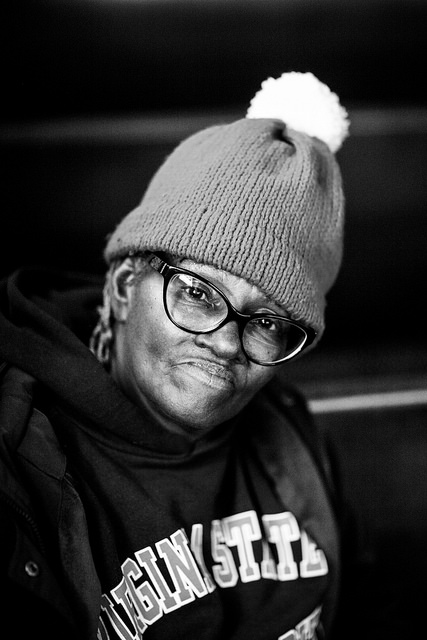
No Need to Hide

Faith from the Margins to the Web Bible Study for Epiphany 2, Year B

Almighty God, whose Son our Savior Jesus Christ is the light of the world: Grant that your people, illumined by your Word and Sacraments, may shine with the radiance of Christ’s glory, that he may be known, worshipped, and obeyed to the ends of the earth; through Jesus Christ our Lord, who with you and the Holy Spirit lives and reigns, one God, now and for ever. Amen.

John 1:43-51

Jesus decided to go to Galilee. He found Philip and said to him, “Follow me.” Now Philip was from Bethsaida, the city of Andrew and Peter. Philip found Nathanael and said to him, “We have found him about whom Moses in the law and also the prophets wrote, Jesus son of Joseph from Nazareth.” Nathanael said to him, “Can anything good come out of Nazareth?” Philip said to him, “Come and see.” When Jesus saw Nathanael coming toward him, he said of him, “Here is truly an Israelite in whom there is no deceit!” Nathanael asked him, “Where did you get to know me?” Jesus answered, “I saw you under the fig tree before Philip called you.” Nathanael replied, “Rabbi, you are the Son of God! You are the King of Israel!” Jesus answered, “Do you believe because I told you that I saw you under the fig tree? You will see greater things than these.” And he said to him, “Very truly, I tell you, you will see heaven opened and the angels of God ascending and descending upon the Son of Man.”

Contributing Authors:  Mary Ann and Faye

“The part that really stands out to me,” said Mary Ann,  “is, ‘Can anything good come out of Nazareth’.  It reminds me of things that people say now. Not about Nazareth, but about other places, like the housing projects, or West Virginia or wherever.  People make assumptions about places and all the people who might live there.”

“I know, that always makes me sad,” said Faye. “But then, I have to say, I want to think positive, but sometimes I think there are places that you only hear bad things about so its hard to not start thinking that way.

Faye paused.  She read that part of the verse again. “You know, that’s true.  I see myself in that.” said Faye. She went on to describe how her daughter married a man from one of the housing projects she felt nothing good could come from.  At at that time she felt he, like everyone there was up to no good. And some of that really seemed to be true.  But, then in spite of all her reservations, she watched him change after his mother died:  “In the beginning, I just couldn’t deal with it and I couldn’t believe my daughter would go out with him, I thought, what could she see in him?!  But then I got to know him and things happened.  For one, his mother died.  And when that happened, he changed.”  Faye said, “I know my daughter loves him, and he’s a great father. I realize now that his mother was in a bad way, on drugs and everything. He really did change, though, after she passed. Sometimes you have to give what you can, give a second chance.”

Mary Ann added, “When I hear people say, ‘can’t anything good come out of…whomever it is for them.  For some people, it’s homeless people, or a gay person, or a someone with addiction…whatever it is, people want to say nothing good can come from them.  But, then I think about what Philip said: Come, and See. In other words, come meet them, break down the barriers, take time for people to meet people who are different than we are.”

“That’s true,” Faye said, “but it’s sad, it’s sometimes so hard for people to talk to people. Like with people who are homeless.  When I’m in the park, I make myself say hello.  Sometimes I’m scared because I think that it could be me, and I know that I couldn’t survive living that way. I’m lucky, though, because I have family. I could knock on someone’s door if I need to. But I like to try to be on my own, to work hard. I’ve worked at hospitals and nursing homes. The nursing home work was hard; there are some people who are hard to work with or that some of the younger girls who work there would say, ‘Not that one, I don’t want to work with this or that one’ but I’d try to help, to remind them that everyone needs to be taken care of.

“It sounds like when you worked in that nursing home, you were doing a bit of what this Gospel is talking about yourself” said Mary Ann, “reminding them that when they thought nothing good could come from someone, there is still a person there.”

Faye thought about that.  She also offered up one last thought:

“I keep thinking about that fig tree,” said Faye. “I think other people need to hear what Jesus says, that he knows us already. We don’t have to hide under a fig tree or anything else. But, honestly, I can see myself sitting under that fig tree, like I do my chair! I just have to remember that there is no need to hide. Jesus knows us.”

faye b&w

Gifts We Have Been Given

A Faith from the Margins to the Web bible study interview for Epiphany, Year B:

O God, by the leading of a star you manifested your only Son to the peoples of the earth: Lead us, who know you now by faith, to your presence, where we may see your glory face to face; through Jesus Christ our Lord, who lives and reigns with you and the Holy Spirit, one God, now and for ever. Amen.

Matthew 2:1-12


In the time of King Herod, after Jesus was born in Bethlehem of Judea, wise men from the East came to Jerusalem, asking, “Where is the child who has been born king of the Jews? For we observed his star at its rising, and have come to pay him homage.” When King Herod heard this, he was frightened, and all Jerusalem with him; and calling together all the chief priests and scribes of the people, he inquired of them where the Messiah was to be born. They told him, “In Bethlehem of Judea; for so it has been written by the prophet:


`And you, Bethlehem, in the land of Judah,
are by no means least among the rulers of Judah;
for from you shall come a ruler
who is to shepherd my people Israel.'”


Then Herod secretly called for the wise men and learned from them the exact time when the star had appeared. Then he sent them to Bethlehem, saying, “Go and search diligently for the child; and when you have found him, bring me word so that I may also go and pay him homage.” When they had heard the king, they set out; and there, ahead of them, went the star that they had seen at its rising, until it stopped over the place where the child was. When they saw that the star had stopped, they were overwhelmed with joy. On entering the house, they saw the child with Mary his mother; and they knelt down and paid him homage. Then, opening their treasure chests, they offered him gifts of gold, frankincense, and myrrh. And having been warned in a dream not to return to Herod, they left for their own country by another road.


Contributing Authors: Lynnette and Davis

After opening with a prayer, Davis and Lynnette took turns reading the Gospel lesson for Epiphany

Davis: “We’ve heard the Christmas message many times, haven’t we?” He went on to paraphrase the Gospel, emphasizing that for him there is such wide-spread recognition of the importance of this child. On the world’s terms, is he a threat or a great ruler? To Herod, he’s a threat. But to the Magi, there were something more that they were following: “The whole idea is they came from halfway around the world and left him treasures…what do you think all that means, for us?”

Lynnette was quiet, then laughed a bit and said: “I think maybe I need to start going to church more!”

“Don’t we all!” Davis chuckled in response.

Sometimes it can seem, from the corners of our world and the social margins that we are on that we don’t know enough, or aren’t spiritual enough, or aren’t something enough to be entrusted with how the Holy Scriptures open up to us.  But that isn’t how it is with God, present with us throughout time and in every corner of our lives, revealing truth that is in our midst.  It was Lynnette who seemed to experience that Epiphany unfolding in the thoughtful, deliberate response that she offered up next:

Lynnette thoughtfully reflected; “Well, if Jesus and God…the Lord…are the same person and Jesus was formed through his mother…well it seems to me that none of us would be here if it weren’t for God, as well as our mothers and fathers.”

Lynette continued, “So, that makes me think that I have to give thanks to God; I pray every night to God and then I’m thankful in the morning when I wake up. I didn’t have to wake up…but I did wake up, so that gives the day a whole new possibility.”

Davis nodded, “That’s a really good way to live; a great way to look at it, really. Every day we wake up and we realize that if it weren’t for God, we wouldn’t be here.”

Lynette spoke again, “God is good, all the time.  I pray to God, and I realize God shows me the way, too. Like today, I woke up and saw that it was a beautiful day. I knew I had to get up, to put me on a smile, to get here to this place. I mean, I know that it isn’t something I can take for granted, you know.  There was a time and place when I thought I was going to die, when they said I needed a transplant. But I knew, I knew that I didn’t have to live that way, that if I kept taking medicine and started taking care of myself it would work. I believed that, and I believed that was God telling me that.  And it has worked out, and that is why I thank God and why I come here.”

Lynnette also reflected about the gift of her family.  “I have three boys; I worry about my kids sometimes but they have their own lives and they are on the right track!”

Davis asked their ages, and was surprised when he heard her children were in their 40’s, “You look like you’re younger than that!”

Lynnette laughed, “I do hear that a lot.  But it’s true.  They are good boys; they grew up with me and I tried to be a good Mama. I taught them good manners, and to have a spirit of love. My own parents raised me right and taught me how to walk the right ways of this life, too, and so I pass that on.”

Davis smiled at her and said, “It seems like Spirit has been in your life for a long time.”

Lynnette said, “Well, maybe I don’t know a lot, but I do know that God is with me.”

“Does God ever speak to you?” wondered Davis.

“You know one day, I heard someone say my name, plain as day. I thought ‘is that God?’” But I didn’t have to wonder. I remembered my Momma telling me, when you talk to God, He listens. So I take the time, take that time now to just talk to Him. I tell God my heart.”

Davis asked, “So, is there anything in here that we learned and we want to tell God?   The take home of this Gospel for me is that this ends up being the way that we celebrate Christmas: we give Christmas gifts…”

Lynnette added, “…and we give love…”

“Right!” said Davis. “We end up re-enacting the scene of Jesus being born, and the Three Kings are always there, giving gifts. It’s like we keep it going.  I want to be thankful for that gift of Jesus’ birth and the ways that we keep celebrating it.”

David and Lynnette shared about how each of their churches have celebrated Christmas over the years. A sense of welcome and giving emerged in their sharing, the commonality of love as the expression of Christian faith surrounded them.

Davis began to wrap up their conversation: “So, since we know that God is here right now, what would you tell God…what would you say…can we just talk right here, to God?”

Lynette chimed in immediately. “Of course we can!  I would.  I’d tell Him I love Him!”

Lynnette started their prayer with that: “I love you, God! Thank you for waking me up in the morning. Thank you for letting me be here. I love you God, and I learned more about You today, Lord and mighty God, through my friend Davis here.  Thank you for being with us.”

Then Davis prayed:

“God I thank you for Lynnette. She reminds me that you are always here. Sometimes I don’t pause enough to give you thanks. But, thank you for being here with us today. Thank you for allowing us to share together today. Thank you for reminding me of your loving presence, here with us today.”

Thank you, Lynnette and Davis, for the gift of your sharing and the light it brings to open this season of Epiphany. And than you, most of all, to God for the gift of your presence of love with us today and always.

Love came down at Christmas

A Faith from the Margins to the Web bible study for the First Sunday after Christmas, Year B

Contributing Authors: Sheryl and Alisha

Almighty God, you have poured upon us the new light of your incarnate Word: Grant that this light, enkindled in our hearts, may shine forth in our lives; through Jesus Christ our Lord, who lives and reigns with you, in the unity of the Holy Spirit, one God, now and for ever. Amen.

John 1:1-18


In the beginning was the Word, and the Word was with God, and the Word was God. He was in the beginning with God. All things came into being through him, and without him not one thing came into being. What has come into being in him was life, and the life was the light of all people. The light shines in the darkness, and the darkness did not overcome it.


There was a man sent from God, whose name was John. He came as a witness to testify to the light, so that all might believe through him. He himself was not the light, but he came to testify to the light. The true light, which enlightens everyone, was coming into the world.


He was in the world, and the world came into being through him; yet the world did not know him. He came to what was his own, and his own people did not accept him. But to all who received him, who believed in his name, he gave power to become children of God, who were born, not of blood or of the will of the flesh or of the will of man, but of God.


And the Word became flesh and lived among us, and we have seen his glory, the glory as of a father’s only son, full of grace and truth. (John testified to him and cried out, “This was he of whom I said, ‘He who comes after me ranks ahead of me because he was before me.'”) From his fullness we have all received, grace upon grace. The law indeed was given through Moses; grace and truth came through Jesus Christ. No one has ever seen God. It is God the only Son, who is close to the Father’s heart, who has made him known.

“Well, first thing I will say is that I know there’s God,” said Sheryl, “I’m a witness and I will give testimony to that!”

“I know!” said Alisha, “Me, too.  I’ve been seeing Him work through other people, and that makes you want to seek Him for yourself.”

Alisha and Sheryl spent many hours a week in the same setting but they had never met; one was a student and the other a part-time service worker, nearing retirement, in the same University.  They had both come to Red Door that Friday for bible study and lunch, just to be a part of this project which intrigued them.  Within seconds, it was clear that they had far more in common than anything that divided them.  It was also clear that what stood out the most in this Gospel for both of them was love.  As Alisha described it, “the Love given so freely by God.”

Sheryl added, “another word that stands out for me is peace.  It took me so long to get to a place where I could feel peace, but now I’m beginning to really feel that…it only took 58 years!” she joked.

“But, once you have that peace, you never want to let go of that!” Alisha agreed.

Alisha continued, “I appreciate the part where John acknowledges who he is and who he is not.  He isn’t the light, but he comes to be a witness and testimony to the light.  I think that’s what we are all called to be: lights in a dark world.”

“Amen!” echoed Sheryl, “and I do try to do that.  It’s why people call me ‘Grandma Sheryl” because I try to always have a kind word, a good word for people who need it.  And, it feels good because I show love, and I feel love.  Everyone comes to me for prayer, ‘please pray for me’ they ask, the young and old.  That’s a beautiful thing.”

“That is beautiful!” said Alisha.  “I’ve been trying to read the Bible and pray more, and I’m starting to feel that peace, too.  So many people are going crazy, feeling so lost with all that’s going on with the president, with the world.  They start to feel hopeless.”

That warmed Sheryl’s heart: “I love hearing that from you, the younger ones!  I always tell my children, if you can stay with the positives, you won’t be following the crowd, you’ll be leading with love.  And they are leaders, just like you!”

“It’s hard” said Alisha, “Sometimes I’m the one person out, who isn’t like the rest, but then I remind myself I know who I live for.  What I get from living for God is greater than the criticism I get from others.  It helps me to see Christians who really live into it, though, instead of people who want judge.”

“Only God can judge” said Sheryl, “you tell them even Tupac said that!”  she added as they both laughed.

Alisha added, “I like this part: ‘We all have received grace, grace upon grace.’  God gives us grace every day.  It isn’t because we deserve it, or just for people we like…it’s a message for everyone.”

“The world can feel hopeless, but it isn’t hopeless,”  Sheryl chimed in as well, “People get despondent, like over Trump in the white house, but we have to remember God is over him, too!  And we have to pray for everyone.  We have to pray for him, too.  People forget that but maybe that means he needs prayer most of all!”

As their study together came toward a close, Alisha and Sheryl named the words where they see God:

“I see God through my Children and Grand-children.” said Sheryl.  “I pray and give my thanks to God every day and every night.  I keep a grateful spirit and use my words to pray to God.”

Alisha said, “My word would be ‘service’ because when I see people who live into their faith, who prepare meals and help others, and do work to make their communities a better place, that is how I see and know God.”

The wisdom of the ages flowed between this pairing of a college student and Grandma to the community as they shared their stories of church-going, struggles, favorite foods and family stories.  Love comes to unite us, to bring peace, to dispel the dimness of our vision with the hope of eternal light and life: “I love our conversation!” Alisha said at the close, “I told you, everyone comes to Grandma!” added Sheryl.

And with that, they prayed.


Nothing is impossible…

When I was preparing these Advent bible studies, I accidentally assigned two pairs of participants to discuss Advent 4.  I wasn’t quite sure what to do about this at first, until I listened to these beautiful, distinctly different interviews.  The stories and styles were unique, but they had one thing in common: the realization that while sometimes things do not turn out as we expect, God is always working through even the seemingly impossible places in our lives to open doors of hope and possibility.  Perhaps this is true even in my own accidental over-pairing this week, too.  So, I have decided to share a bit of both interviews on this week’s blog.  Thank you to Charles, Candy, Dem and Elaine for sharing your stories and illuminating how, like Mary and Elizabeth, we come to realize through the stories of our lives that nothing is impossible with God.

Advent 4, Year B:

Purify our conscience, Almighty God, by your daily visitation, that your Son Jesus Christ, at his coming, may find in us a mansion prepared for himself; who lives and reigns with you, in the unity of the Holy Spirit, one God, now and for ever. Amen.

Luke 1:26-38

In the sixth month the angel Gabriel was sent by God to a town in Galilee called Nazareth, to a virgin engaged to a man whose name was Joseph, of the house of David. The virgin’s name was Mary. And he came to her and said, “Greetings, favored one! The Lord is with you.” But she was much perplexed by his words and pondered what sort of greeting this might be. The angel said to her, “Do not be afraid, Mary, for you have found favor with God. And now, you will conceive in your womb and bear a son, and you will name him Jesus. He will be great, and will be called the Son of the Most High, and the Lord God will give to him the throne of his ancestor David. He will reign over the house of Jacob forever, and of his kingdom there will be no end.” Mary said to the angel, “How can this be, since I am a virgin?” The angel said to her, “The Holy Spirit will come upon you, and the power of the Most High will overshadow you; therefore the child to be born will be holy; he will be called Son of God. And now, your relative Elizabeth in her old age has also conceived a son; and this is the sixth month for her who was said to be barren. For nothing will be impossible with God.” Then Mary said, “Here am I, the servant of the Lord; let it be with me according to your word.” Then the angel departed from her.

Contributing Authors: Charles, Candy, Dem and Elaine


Dem and Elaine: Watch out for Gabriel, and watch out for God!

By the end of their interview, Dem and Elaine were laughing so hard together that neither of them wanted the conversation to end.  These two women had never met before, but by the time the interview wrapped up, they realized they shared so much in common with each other that it was uncanny, and their very different yet serendipitously similar perspectives on life brought joy which bubbled over from them.  Listening to their interview, I could practically hear them finish each other sentences as they allowed the Gospel lesson to unfold in their conversation.

Elaine began the conversation after the reading by telling the story in her own words: “So, what we’ve heard then is this: Elizabeth is pregnant, she’s six months along.  Her cousin Mary is sitting down there in Nazareth, engaged to a man but she’s still a virgin.  And along comes this angel, Gabriel, and says, “I know Mary, it doesn’t make any sense but the Holy Spirit is going to visit and poof, you’re pregnant.”

Both women said, at the same time, “Watch out for Gabriel!”

In the midst of their laughter, Elaine picked back up and said, “But then Mary says “how can this be?” and then the angel comforts her and tells her something…the same thing that her cousin, Elizabeth, had also been told by the angel: nothing is impossible with God.  Now, we didn’t read this part today but there is also this other part of the story where Mary goes to stay with with Elizabeth, and when she arrives,  Elizabeth sees her and she just knows by looking at her, “You’re pregnant!” but at the same time, she also knows immediately that this is no ordinary pregnancy; this is God’s child she is carrying.”

Dem had a light bulb of awareness go off:  “OK!  That’s the part that I didn’t get before.  I mean, I know the story because it’s the Christmas story and all of that.  But the part I didn’t get before was the preparedness.  How Mary really thought about this, how Elizabeth also knew this.  I really, really like that.”

Elaine said, “I’m always amazed at how Mary was able to say yes to this, to give herself over to it, especially at that time and in those circumstances.  That giving it over to God is always hard for me.”

“Oh yeah” said Dem, “I can’t do that.  It’s that ‘let go, let God’ thing and I’m not good at that.  I know there’s something bigger than me out there but sometimes I’m not so sure that I can really pray, or find the words.”

Elaine said, “It’s hard, I know.  But I think not all prayer is talk, talk, talk though.  Sometimes prayer is just being there, opening yourself up, being prepared to hear what you need to do, which isn’t always what you want.  It’s scary to do that. Have you ever tried that?”

“I’m uncomfortable just thinking about it,” admitted Dem.  “There’s so very little that I’m in charge of in my life right now that I try to grasp onto whatever I can.”

Dem went on to tell her story.  She had been to several schools with degrees in Education, Theatre in work experience in Horticultural design.  Her path has been very circuitous, though, and not everyone was supportive of her as a woman returning to school in mid-life.  Finally, she found herself in a position where she fell to her backup experience in landscaping, but even in that manual work she hadn’t been able to find work other than something seasonal.  But, as she was telling to to Elaine, Dem added:  ‘actually I think something else is opening up for me.’

“Not everyone knows I live in a shelter” she said, “but I tell my story because I’m grateful to have support and to have places like this and case managers to help me regroup.  I had to think: is this really what I want to do?  And then, the flooding in Texas happened and I thought, I could help there.  So, my shelter case manager got me signed up to volunteer with the Red Cross for hurricane relief.  I went and did all the training but at the end, they said to me, ‘we aren’t going to send you.’ I was so disappointed.  Then, my supervisor said, “But, it’s because we think you would be a great case manager because we see how well you work with people, how you can relate to them and how your own story of needing shelter lets you be open to others and so resourceful.  Let us train you while you’re being supported by the shelter, then we’ll hire you and you can be a part of our travel team, if you’re willing to relocate.’  So, here I am, I’m just finishing up my training.  In a few weeks, I’ll be going wherever they need me, working for them.  And, I’m really excited to be doing something that feels like its so needed for others, and to help others like I have received the help I need.”

Elaine’s voice was soft, rather like Elizabeth’s moment of recognizing the greatness of God at work. “You know, Dem, I think that the cream rises to the top!”  they both chucked. Then, Elaine spoke the truth that was becoming clear between them: “Do you know what you’re doing?  You’re asking for God’s guidance.  You’re opening yourself to God’s will.  You may not know it…but you’re doing it.  You just showed me that.”

cropped-red-heart-in-hands


Charles and Candy: Holy Spirit, Healing and Hope

Meanwhile, in another room, Candy and Charles were talking about hope and healing.

“What stands out to me is the Holy Spirit.” Candy said immediately.  She recalled how there were times in her life when it seemed like it would be impossible to do something, but that in praying, she found comfort in the Holy Spirit’s presence.

Charles agreed, “In my own life, I see God as being in my heart and in my mind.  It’s like God puts something inside of me, like love, and it’s there for people I’ve met and even people that I haven’t met.”

As they shared their thoughts on this Gospel lesson, although it wasn’t just the general, mysterious ways of God that stood out to them: it was their direct encounters with the impossibility of profound healing that stood out in this Gospel of hope and reassurance.

Charles related his story first: “Well, one day, you know…I don’t really go to see my Mom as much as I should.  So, maybe it was that my Mom didn’t want to tell me, but I saw a friend and he said, “Look, hey, you need to call your Mom…she’s sick.”  And so I did, I called her right away.  She said, “I didn’t know how to tell you, but I found out that I have breast cancer.”  I felt bad for not calling, and I felt terrible for her.  So, I got off the the phone and I prayed to God.  I prayed, “Please God, heal my Mom.”  And I don’t know what I expected because, you know, well…it just doesn’t always happen that way.  But God did heal my Mom.  She doesn’t have cancer anymore.  And that was a changing point for me, you know, in our relationship, too.  So, I know God was there.”

Candy related a story of unexpected healing in her own life.  She shared about her now late husband, who was having very painful struggles with his health at the time: “It just kept going on, week in and week out.  We’d been to the emergency room and I was just so tired.  But, I knew that I had to come to church.  I felt prompted and pushed by the Holy Spirit to come.  So, I came here and there was this visitor, who was someone that I knew who was an Episcopal priest from another part of town.  I didn’t expect to see him, and of course we knew one another and I knew that he was someone who I thought of as having a real gift of healing.  So, after the service he said to me, ‘is everything alright?’ and so I told him about all the pain and troubles my husband was having.  He said, “can we pray together?” and of course, I said yes.  So he held my hands and we prayed; I was actually holding onto his sleeve, the sleeve of his jacket and I thought about that woman, in another Gospel lesson, who had the terrible issue with bleeding and who touched Jesus’ robe.  So, when I got home, my husband was healed from all of that pain and bleeding.”

“Wow!” said Charles.

“Wow is what I said about your mother, too!” said Candy.

There was a moment of quiet between the two of them, the holy space of realizing that it wasn’t just a long-ago story of the impossible, but of the Holy Spirit making the impossible happen even within the comings and goings of their everyday lives.  As they closed the interview and turned off the tape recorder, they decided to pray for each other, too, before going their separate ways.

Nothing, indeed, is impossible with God.

These stories and struggles of life’s impossibilities: struggling with health, hoping for healing, being older in a youth-seeking workforce, humbly trying to find a place to lie one’s head, the power of realizing one’s potential but not knowing how it will happen.  This week’s story sharing seemed to break open the disbelief that keeps us from seeing and knowing God in our midst, opening up to the possibilities that even when we think we are incapable of allowing God’s movement in our lives, we are often living into divine possibility in those very ordinary moments of our extraordinary lives.  No one in these interviews would say that their lives were perfect, and they are certainly not without struggle or loss.  But God was and is clearly present and moving.  In this sharing as we round out the Sundays of Advent in anticipation of all that is to come, we are filled with the hope and expectation of all that is possible with God.

Glory2God.jpg


Holy Waiting

A Faith from the Margins to the Web bible study for Advent 3:

Stir up your power, O Lord, and with great might come among us; and, because we are sorely hindered by our sins, let your bountiful grace and mercy speedily help and deliver us; through Jesus Christ our Lord, to whom, with you and the Holy Spirit, be honor and glory, now and for ever. Amen.

John 1:6-8,19-28

There was a man sent from God, whose name was John. He came as a witness to testify to the light, so that all might believe through him. He himself was not the light, but he came to testify to the light.

This is the testimony given by John when the Jews sent priests and Levites from Jerusalem to ask him, “Who are you?” He confessed and did not deny it, but confessed, “I am not the Messiah.” And they asked him, “What then? Are you Elijah?” He said, “I am not.” “Are you the prophet?” He answered, “No.” Then they said to him, “Who are you? Let us have an answer for those who sent us. What do you say about yourself?” He said, “I am the voice of one crying out in the wilderness, ‘Make straight the way of the Lord,’” as the prophet Isaiah said. Now they had been sent from the Pharisees. They asked him, “Why then are you baptizing if you are neither the Messiah, nor Elijah, nor the prophet?” John answered them, “I baptize with water. Among you stands one whom you do not know, the one who is coming after me; I am not worthy to untie the thong of his sandal.” This took place in Bethany across the Jordan where John was baptizing.

Authors: Willie and Sarah

In full disclosure, this isn’t an interview between two strangers.  This week, Faith from the Margins to the Web features Willie, who is an inspiration on my journey.  Willie is a regular at the Friday Red Door Healing Service at the parish I serve, and has been part of the circle of people who have been formative for me as a seminarian.  He listens intently to the way the Gospel lesson breaks open for me when I preach and teach; he gives me regular feedback about my sermons; he asks me questions about holy scripture as astute as any seminary professor; he writes his questions down during the service and studies them at the public library.  Last year, Willie was homeless and squatting in a garage.  He finally was able to find housing and attend to his health which had been deteriorating.  Now he spends hours each week, sitting in dialysis, reflecting, writing and inwardly digesting those scriptures while praying for the dialysis staff, his family, his friends, this world in which we live.  Willie redefines for me what it means to live into holy waiting.

This week, I sought out Willie’s expertise so we could examine the Gospel for Advent 3 together.  In our bible study, this wise and learned man of city streets and dialysis clinics shared his Advent wisdom of holy waiting with me, and we likewise share it with you.

Willie reads the Gospel Lesson: John 1:6-8,19-28

“You know, Sarah, basically, when it comes down to it this is a Gospel that tells us that the Lord Jesus is there waiting for us. And that’s it. He is always really going to be there for you and that’s a comfort right there. But, in this Gospel, he’s getting ready to make his first appearance to these people and I can’t help but think…they have no idea what they are going to be in for!  I don’t even know how I would behave if I was there.  Imagine it…with my little sandals, garb, and everything, hearing about a messiah and getting ready to see Jesus for the first time, seeing him do the things that he’s going to do.  I would have no idea what we were in for!”

As always, Willie found a doorway right into the scripture.  I responded: “I love that, and I think that’s so true for us now too. Maybe when we study this scripture, we look for predictability or familiarity, because we think we already know the story about to unfold. But then, the reality hits you just like that.  We never know the story before hand!  When you follow Jesus, you have no idea what you’re in for. But when you follow, you can be assured that it’s going to be an adventure.”

Willie was nodding, “That’s right! When I read in the bible how people saw what he did, they were hooked. They followed him everywhere. And I think that alone caused these people to be like, “what is going on here? Who is this guy?”

“Yeah, I like that.” I said. “That’s really a good model for us to think about. What I was also thinking was that this gospel gives us a description of John’s identity and identity is an interesting thing, because we have the “us” we know and then the “us” that we show the world.  I think we get to see a bit of both in what John says and does!  So, I have a question for you…how would people, who know you, describe your identity? Like John, what ways do you try to live into your identity or your sense of what you’re called to do?

“Oh, this is getting deep here now!” Willie chuckled. “I think that for me…well, I just came back from dialysis…and I think most of the time, people look at me like ‘What’s wrong with this guy? Why is he so quiet? He doesn’t talk to people much.’  But, here I am, talking my tail off here with you!  But, the thing is that I know something they don’t, and that is that I know what’s making me quiet.  I never forget this…I’ve read it in scriptures, and in religious books. They talk about the stillness and that when we are still, that’s when God can talk to us. And if we are quiet, people notice…in that that kind of scenario like the clinic…a lot of people just talk and talk but aren’t really saying anything. When they see someone like me that’s not you know, falling into that same pattern…well, that quickly in itself draws them to say ‘what is he doing? Why is he so quiet? He hasn’t said a thing.’ But see, I’m listening. More importantly, I am trying to really get into the Word. So, when everyone is finally quiet, it’s like…yeah, that’s what I want.”

I breathed deeply and held that holy silence with him for a minute.  Then, I breathed the words: “Be still and know that I am God.”

“You know, Willie, sometimes, I think…well, I don’t really believe God gets bored with our prayers but sometimes I realize how I can rant on to God with like 10,000 things I’m praying about. But I think what I am really craving and what God craves of us is to just be present and to be still. Sometimes, that knowledge transcends words or transcends all those requests.  Stillness is very powerful.”

“Yes, that’s true!” agreed Willie. “I believe there is a blessing just for doing that. I think that in the bible there are probably other prophets that found that out, too. They just were quiet and things would be revealed to them from God.”

I decided to share a little of my own inner life, too. “That question about how people may describe my identity is interesting to me. I think people know me in a lot of different, specific ways. But, when it comes right down to it, I’m really still myself in all these different ways. You know, when I’m Sarah the professor or when I’m Sarah the preacher/pastor or Sarah the friend.  I show different parts of myself at different times, to different people, but there is a core of who I am that belongs to God and that always finds a way to come through. People tend to describe me as cheerful; they seem to notice a smiling or lightness about me. It’s interesting because, to be honest, sometimes I’m not feeling that at all.  I’m prone to feeling stressed or anxious, actually. But I try to start my day and pray to be present for whatever emerges. You never know who you are going to encounter or what’s going to come your way. So, I think being present lets God work through us. In other words, I hope that what people are seeing is that I’m not just some nice, smiley person; I hope that what people see is an identity that is reflecting the presence of Christ. That’s what I strive to be, sometimes by getting out of my own way. Not letting a bad day or a bad attitude get in the way of letting God shine through.”

Willie smiled, “Well, I figured I’ve come back to you many times. The way how you deliver the sermon and stuff on Fridays is with self-control and everything. I don’t sense any nervousness or anything. Even just reading out the program, you have a tendency to keep us all calm….if we are in a rush, just listening to your voice helps us slow down.”

It made me happy to hear that. “I have to say Red Door is probably my favorite half-hour of my week. Not that I don’t have other times that are important, of course, but it is very…well, it feeds me spiritually.  Sometimes, I get really busy when I’m preaching or leading or listening, but that time and space always feeds me. That’s one of those times when I hear, “Be still and know that I am God.”

Willie continued, “I think that’s like what I was saying. That little dialysis area, where I am at to do what I need to do…because I’m in the Word when I’m there, I hear different things. Also, you’re aware of how people may be mocking you or saying foul things and all you’re doing is focusing on the Word. But you’re hearing all these other things with your ears and I’m saying: ‘Go on Willie, go on, don’t let this effect you. Have the self-control to get something out of this. You opened up the book, continue reading it.’ And there’s a little battle going on right there. Because when people can’t help it anymore, some of them come up right up to me there and say ‘What is that you are reading? What are you doing?’ Because your behavior has been so quiet and somewhat withdrawn. That alone is causing them to peer in and figure out ‘What is he doing?’ And sometimes, I’ll just stop, smile, and know, to some extent, it may be driving them crazy for a good reason. All of this I’m doing just to read the Word. And, don’t let me get started about writing. Because sometimes when I do that, I’m now going to take it a step further and actually communicate with God right there on the paper.”

I could imagine this scene playing out, just like Willie could picture John the Baptist. “I  think of you in that space, making something that could be an arduous, awful health task, something that no one looks forward to, and making it into a holy space. How has the dialysis bed become a holy space? It’s because you invite God to come in.”

“That’s right” said Willie.  “By the time I get ready to finish treatment, whatever people are thinking, that’s when I fool them all because now I’ll probably show some of God’s love right then and there as I get ready to leave or find some way to be a service to them. You know, just do little things and not be in a hurry to just run off. But, to be a service in any way I could. And, say a little something as I get ready to go. You see, I believe that is the Holy Spirit. Sometimes, I feel cornered or anxious or inside I’m saying ‘let me just get out of here.’  But, I think that’s when He just says ‘no, no there’s some other people you can help out and say a kind word to before you go.’ Because everyone usually has some degree of excitement when they are free from the machine. No more needles or needles coming out. You’re free to do whatever you want.”

I realized when Willie said that just how much we take that freedom for granted, “And you’re experiencing that freedom. We don’t realize the feeling of freedom or appreciate it until we lose that.”

Willie responded very affirmatively, “Yes! And sometimes I actually come out and say that to whoever is listening to me. “It feels so good to be free now.” They have been telling you for hours, don’t move your hand, stay still, and sometimes I have gotten a little upset. When I see myself going there, I look for the book. It’s stuff that I have written down that comes from the Lord that I feel is important to me to write down in there. It can be a comfort, a rescue, for me to just open it up and that’s the right place for me to do it. I hope and pray that it is making God’s day because I’m taking the time to read His word and understand it. Just like he said, at least try.  It’s what we can do.”

Advent is a season of holy waiting; for the Messiah to appear, for the Word to be made Flesh and dwell with us.  Whether our daily routine is an office, a street corner or a dialysis clinic we are easily caught up in the chatter that can distract us from our true identity in God.  Willie’s wisdom is revealed in the simple power of holy waiting, of focusing on the Word with us, residing in our lives, and opening us to God who meets us in stillness with the words, wisdom and knowledge we need to live into our true identity in Christ.  Wherever you are, whoever you are: may stillness find you during this season of holy waiting.

Camel Haired Messengers of God

A Bible Study Reflection for Advent 2, Year B

Authors: Tom and LT

Merciful God, who sent your messengers the prophets to preach repentance and prepare the way for our salvation: Give us grace to heed their warnings and forsake our sins, that we may greet with joy the coming of Jesus Christ our Redeemer; who lives and reigns with you and the Holy Spirit, one God, now and for ever. Amen.

Mark 1:1-8

The beginning of the good news of Jesus Christ, the Son of God.

As it is written in the prophet Isaiah,
“See, I am sending my messenger ahead of you,
who will prepare your way;
the voice of one crying out in the wilderness:
‘Prepare the way of the Lord,
make his paths straight,’”

John the baptizer appeared in the wilderness, proclaiming a baptism of repentance for the forgiveness of sins. And people from the whole Judean countryside and all the people of Jerusalem were going out to him, and were baptized by him in the river Jordan, confessing their sins. Now John was clothed with camel’s hair, with a leather belt around his waist, and he ate locusts and wild honey. He proclaimed, “The one who is more powerful than I is coming after me; I am not worthy to stoop down and untie the thong of his sandals. I have baptized you with water; but he will baptize you with the Holy Spirit.”


Tom had just finished reading the Gospel lesson when he jumped right in:  “This is one of my favorites…have you ever seen Jesus Christ Superstar, or Godspell?”

LT hadn’t.  He was quick to apologize, “No, I have not.  Honestly I did not grow up reading scripture so this is all very new to me.”

Tom continued, gently explaining to this younger college student some less than familiar detail about the story of John the Baptist.  Most people know Tom as a quiet, hard-working man of the street who works manual labor jobs whenever he can.  They are unlikely to realize his profound knowledge of scripture, although his quiet devotion to weekly church services and his interior calmness clearly source from somewhere.  As he confessed to LT, “I even spent a couple years considering the Catholic priesthood.”  It had been a while since his seminary classes, but he was happy to share more about some of his favorite details from the story of John the Baptist:

“The part I always liked about John the Baptist was, well, ‘living on locust and wild honey.’ It’s just one of those things you can’t ignore. Wild honey is easy enough to do, but I don’t know – I’m not supposing that they were chocolate-covered locust. No, believe me, those things are like really really ugly…they multiply like flies, and they eat everything. So him eating locust when usually what they’ll do is eat all the food in a particular area and drive the area into famine because they’ll take food plants as tall as corn in a matter of minutes…it’s eaten down to the bare ground.”

“Being clothed in camel’s hair had to be pretty uncomfortable. Sometimes the medieval monks would deliberately wear a hair shirt; it’s incredibly itchy and it would help them to remember one of their vows is poverty, and at the time they had this whole thing about ignoring the body and moving towards the spiritual. So the hair shirt, which was very uncomfortable; it helped them mortify themselves; a denial of flesh kind of thing.”

“They were related, you know…John the Baptist and his cousin Jesus.  John was born first, but both Mary and John’s mother Elizabeth heard that they were expecting around the same time. And she…Elizabeth…was considered too old to be bearing children anymore. And Mary, obviously with a virgin birth, well that’s a real eye-opener, but in the same family one comes first and the second one follows – just to prepare the way. To get into people’s head that someone greater than John the Baptist is coming, ‘I’m just his messenger,’ but a messenger helping Judea and Jerusalem prepare for the coming of the rightful king. Which is pretty cool.”

“Unfortunately, though, John was beheaded…he became very politically unpopular. King Herod was quite corrupt, but he was excellent at getting along with the Romans, who allowed him to be the king of Judea. The last thing he wanted in the world was anybody talking about a new king coming; that a messiah was coming. Half the people thought he was going to be a political messiah…this savior to come save the people here and now. But all Jesus was focused on was being a spiritual messiah that would enable his people to deal with jerks like Herod and the Romans, who were conquerors and anybody that fought that would usually get crucified.  Well, we know that story.”

LT was listening intently; you could hear his building interest in this story winding piece-by-piece out of Tom, telling it as though narrating his own block-buster movie.  It was LT who posed the next question: “Where is God in this story, in your own life?”

Tom grew thoughtful.  “God in my own life is a quiet presence that’s kind of a background hum. Not all the time, because I get distracted like anybody else could. I get a little bit too concerned about things that I really shouldn’t worry about too much. You know, like am I going to have enough income? I’m approaching retirement, it’s like (jokingly) ‘oh can I retire in style?’ You know, that kind of thing. Well, the big answer for that one is ‘no’ for me, but I’m not going to be concerned about it, you know. But I always felt that God was a good, strong part of the background hum.  The bible is helpful to me because it helps me understand what exactly that hum means. If you’re standing near a raging river…well, the sound of water will always be a background hum in your life, but it has nothing to really tell you about how much just the raw power for change that river can contain in itself.”

This resonated with LT: “I definitely would agree, I feel the same way. Just from my own experiences, I feel like God wouldn’t constantly be there trying to control you. He’d kind of nudge you towards the right direction whenever you got too far off what you should be doing.”

Tom continued, “I always hear some people saying “if God cares so much about us, why does he allow people to die and little children starve to death and people getting murdered or overdosing or whatever.” Well it’s no question that God could do that, but then we’d never have free will if that were the case. We’d never be self-governing. We’d just be little wind up toys.”

LT agreed, “Free will, in my opinion, is what makes life worth living.”

“Sure,” said Tom, “risks and all. It’s funny because when my friend overdosed, I had warned him like five times “You don’t know what’s coming in from Mexico. You got fentanyl, ketamine, and heroin all mixed together and it’s going to kill you if you keep going with it.” And one day, he disappeared for a second…came back two minutes later he was carrying his stuff premixed. He went around the corner, it was at night, came back, and just fell out right in front of us. He had the antidote for opiates, naloxone, he even carried that with him. But it wouldn’t have done a thing about the ketamine. And the fentanyl was highly questionable if it was even strong enough to do anything like that. Oh, and he was drinking on top of it that night. It was just tragic how and why it ended. It’s an unreal number of people that die from overdoses. It’s been something like 36,000 deaths this year so far.”

This message felt very real to LT, too:  “Yea, it’s a real epidemic. I obviously can’t comment on why other people do it, but my friend did it because we both grew up in such a way that our parents were always busy. We were young, we were stupid. We didn’t have much else to do, and we figured that the best thing to help our families was to just try to make our own money. For a while we both got into dealing, but the difference was that he started using. For him, it was just an escape from life, and it didn’t end too pretty…ketamine, that’s something that seems to come up too much.”

Tom knew this, too: “Yea, really. And the opiate antidote is just totally ineffective on that.”

LT began to see the message, “I guess the best you can do is just learn from others and hope to carry on.”

Tom became nostalgic, “Yea, and try not to ever get into the same mindset that leads to that. Our friend had any number of issues going on, but there was no one of them that would lead to a deliberate suicide…but he was doing hardcore drugs since he was like 14 years old so he was already used to them. And the “not me” syndrome was really clear in his behavior, “oh it’ll never happen to me”, but, well it did.

LT could empathize.  “I am almost positive that is a magical side effect of doing drugs. Everybody has that “not me” syndrome.”

“Exactly,” Tom said, “it’s magical thinking.  I’m glad that I was able to avoid it, and still will. You know, I’ve had broken bones and I’ve had oxy and things like that. They alone are too good. As soon as I was feeling like I could deal with the pain, it’s like “no, I don’t want another prescription, no thank you.” But you hear about these kids whose moms and dads are on some hardcore high-strength oxys, and they leave it in the medicine cabinet in the bathroom. Kid hits eleven, twelve, thirteen…”Gee, well, mom and dad take these all the time and it seems to work for them.” You know, they’re in the adolescent struggle: “let me try a couple.” Which might be fine and dandy, but when that becomes ineffective, then they’re on the streets looking for the real hard stuff.”

The message was becoming clear to both of them at this point.

For LT, it all related back to the ice-breaker we had done earlier, naming the saints in our lives:

“In the ice-breaker, I mentioned my friend Brian. Brian was a close friend of mine who I grew up with and basically viewed as my brother. I consider him my angel because I accredit him with why my life has turned around. When we were in our early teens, we used to sell drugs as a means to cover our own expenses and wants without adding financial burden to our respective families who were already working very hard to make ends meet. Eventually, the financial burdens that our families bore became very prevalent which added onto other struggles that we were both going through related to school. Looking back now, it wasn’t anything unbearable, but in the moment as a teen, it feels like the world is falling apart. As a coping mechanism, Brian started getting into hard drugs. This went on for several years, and although I never joined him, I still held the same depressing mind set as him. This all changed when he overdosed. His death made me rethink my life and realize that everything I had been doing was wrong. I did everything in my power to turn my life around from that point on. I stopped selling drugs and distanced myself with what I viewed as the wrong kind of people, I started to talk and connect to my family more, I began to value school and the idea of aiming for a better future instead of feeling sorry for myself and giving up. As the years went by, everything seem to fall into place. I made new friends that were better influences on me, I became less bitter and violent, I finally had a good relationship with my family, and I went from someone who was constantly flunking tests and mouthing off to teachers to someone who excelled in school and was no longer seen as a troublemaker.”

Tom nodded, “Oh yea, I could see how it could be a life changer if you were paying attention. So it was the actual act that delivered the message to you?

LT continued, “Yea, before I didn’t really care about school, or anything. It was just a lot. Thinking back now, I was just being really unreasonable or just stupid. And now what, 3-4 years later, I’m the first in my family to graduate from high school and the first to go to college and hopefully graduate.”

Tom and LT, strangers before that day, continued to exchange stories with each other, delivering messages of hope and peace amid lives of complexity, loss, temptation, challenge, repentance, and reconciliation.  The sound track to their lives continues on, the continual hum of God’s presence making God known through messengers of all forms: the rough-haired wake up calls of addiction and death, the belovedness of friends and family, the support of people who once were strangers but who find common ground, as we all do, in the Good News.

God has a way of bringing us together on this journey, reminding us that even in the darkest chapters of our human lives, we are never alone. Pairing Tom and LT together for this bible study was, by all human accounts, purely random. But not so much with God, who knows our stories and knits us together through the power of the Holy Spirit.

The Good News sometimes breaks through in those people and situations we least expect, even those whose camel-haired appearance and locust eating ways might otherwise cause us to turn away.  As Tom said, it’s all about paying attention.

Who or what are the camel-haired messengers in your own life?


The Big Unknown

Almighty God, give us grace to cast away the works of darkness, and put on the armor of light, now in the time of this mortal life in which your Son Jesus Christ came to visit us in great humility; that in the last day, when he shall come again in his glorious majesty to judge both the living and the dead, we may rise to the life immortal; through him who lives and reigns with you and the Holy Spirit, one God, now and for ever. Amen.

Mark 13:24-37

Jesus said,
“In those days, after that suffering,
the sun will be darkened,
and the moon will not give its light,
and the stars will be falling from heaven,
and the powers in the heavens will be shaken.
Then they will see ‘the Son of Man coming in clouds’ with great power and glory. Then he will send out the angels, and gather his elect from the four winds, from the ends of the earth to the ends of heaven.

“From the fig tree learn its lesson: as soon as its branch becomes tender and puts forth its leaves, you know that summer is near. So also, when you see these things taking place, you know that he is near, at the very gates. Truly I tell you, this generation will not pass away until all these things have taken place. Heaven and earth will pass away, but my words will not pass away.

“But about that day or hour no one knows, neither the angels in heaven, nor the Son, but only the Father. Beware, keep alert; for you do not know when the time will come. It is like a man going on a journey, when he leaves home and puts his slaves in charge, each with his work, and commands the doorkeeper to be on the watch. Therefore, keep awake—for you do not know when the master of the house will come, in the evening, or at midnight, or at cockcrow, or at dawn, or else he may find you asleep when he comes suddenly. And what I say to you I say to all: Keep awake.”

The Big Unknown

A Gospel Reflection for Advent 1, Year B
Faith from the Margins to the Web Authors:  Steven and Davis

“This says a lot to me,”  began Steven after reading through the Gospel lesson,  “there’s a lot in here especially about God’s grace and being aware that he is coming back to earth. And, that he will be with those who are suffering. And, that we should be aware of this coming because a lot of people don’t believe that God is coming back to this earth but he is coming back, by this reading from Mark. I know it speaks a lot in here about grace. And, I don’t think a lot of people know the true meaning of what grace really means.”

Davis was intrigued, “What does it mean to you? What does grace mean to you?”

Steven responded thoughtfully: “God’s unforgiving love for the faults and things we have done in our life that is not right.  He grants us this grace, His grace.”

Davis pushed these thoughts a little further, “It’s interesting you use the word grants.”

“Well,” said Steven, “I shouldn’t say grant…we don’t earn it. We’re really not worthy of God’s grace, not ourselves. But God, you know, willingly gives it to us because of His love for us. It also speaks about humility.”

Davis was being drawn in by these words flowing from his bible study companion.  Steven, a very humble and quiet man, finds shelter and community at church-sponsored lunches where he sits with a quiet smile for all who pass by, knitting sweaters and scarves from the big bag of yarn he carries wherever he goes.  Davis asked, “What is humility? How does that speak to you?”

Steven answered, “It’s showing love and kindness for those who are around you and those that are suffering, and giving a helping hand to those when you see they are in need.”

Davis echoed this, “Yes, that’s a good way to put it. And then, there’s that strong message about being alert, you never know when the father is coming. Keep alert, do not know the name or the time. Is that frightening, that we don’t know?”

Steven nodded vigorously, “To me, it’s very frightening that we don’t know the day or the hour that he is coming back. That’s something that tells me we should stay firm in faith and pray every day. You know so, that we will be prepared when he comes back, our souls will be right.”

Davis agreed, “If you know something, you can kind of prepare. If you don’t know it, like this, then you have to be prepared all the time.”

Steven noticed, “It says here, neither the angels in heaven or the Son will know. That’s something because the angels are in Heaven with God.”  Davis jumped on that, “…and even they don’t know!”

Steven continued, “Yeah, they’re up there with the Lord and they don’t even know…it’s the big unknown.  And then it says the generation will not pass away until these things take place. So, that’s talking about us.   It says heaven and earth will pass away but his word will not pass away. But, I’m a little confused because why would heaven pass away?

Davis was equally puzzled, wrestling with this, “I know, I know.”

Steven continued to dig deeper and wrestle with the lesson, “I could see earth…earth could pass away…but, it says heaven and earth.”

Davis stepped deeper into this wrestling, too, “Maybe…I don’t know, I’m just thinking Steven…but maybe it means that this earth as we know it will be different in some way. Maybe it will be something different. Maybe it will be something new. To me, God’s grace is infinite and what he has created seems to me will somehow continue on at some point.”

Davis continued to ponder this, “I guess I have to believe is that our souls, our lives go on in some form…in some way, that maybe we can’t understand.”

Steven responded, “In some form, maybe a heavenly form.”

Davis kept reading and paraphrasing the lesson, “If we pass this earth, which we will, we go to some other place which we don’t know. Heaven and earth will pass away…but my words will not pass away.”

Steven found the emphasis for him: “Will not pass away.  His Word will not pass away.  To me, it’s spiritual and enlightening because it’s telling me, you know, all this is coming so you need to pray every day, and just be aware of what’s going on in the world. Trying to read the newspaper, your bible, and being aware of what’s going on in the world.  The Word of God will not pass away.”

“Do you pray regularly?” asked Davis.

Steven replied, “Yeah, every morning.  I read the bible also but I usually pray every morning when I get up. Sometimes, even before I go to sleep at night.  I think this whole verse means that we should pray. We should watch as well as pray. I think that’s what it means. That we should watch as well as pray. And stay spiritually within his Word and his teachings.”

Davis paused, pondering another question he wanted to ask: “Earlier, Steven, you used the word humility. You used it as looking out for others. I thought that was interesting that you used the word humility. To show humility and look out for others. It seems like it gives our life direction, an action…looking out for others, showing humility, showing concerns for others.”

Steven nodded, “I think a lot of that humility is when you pray, you see there is a need and you know you can help.”

“Right” said Davis, clearly turning this over in his mind. “It’s interesting when you see it that way…seeing that there is a need is another way of being alert, and that is what we’ve been reading. Looking out, being alert, being aware, keeping watch. Keeping watch seems like it allows you to see things. Needs, opportunities…God works through us in these things, when we keep awake.”

Steven echoed that, “I hear people use the expression all the time, that God works in mysterious ways.  And even if we don’t understand it all, God can keep working through us.”

Davis smiled, “Yeah, even in ways that we don’t understand often.  Thank you for this conversation, Steven.”

Steven echoed this: “I’ve enjoyed this, it’s been wonderful today.”

As Stephen and Davis prayed with each other again to close their time together, the mystery of Advent seemed to enfold them.  Being awake, living in humility, opening our hearts through prayer are ways in which we move from this temporal and finite world toward the infinite, immortal, unknowable coming of the Word made flesh. At moments such as this, we catch a glimpse of the Big Unknown into which we are invited to participate.

The Least of These…


Beginning the first Sunday of Advent, Faith from the Margins to the Web reflections will be posted weekly on Tuesdays, in preparation for preaching, bible study and other reflection on the upcoming Sunday’s Gospel lesson.  Be sure to follow and share Faith from the Margins to the Web so you can receive a new reflection each week of the liturgical year.

This week, participants Lisa and Mary Ann met to reflect together on the Gospel lesson from Matthew for the Last Sunday of Pentecost, Christ the King.  As you will hear from their words and their lives, Christ sets our example for beloved and compassionate presence even with “the least of these…”

A Faith from the Margins to the Web Reflection
Last Sunday of Pentecost, Year A (Christ the King)

The Least of These

Faith from the Margins to the Web Authors: Lisa Myers and Mary Ann Blankenship

Almighty and everlasting God, whose will it is to restore all things in your well-beloved Son, the King of kings and Lord of lords: Mercifully grant that the peoples of the earth, divided and enslaved by sin, may be freed and brought together under his most gracious rule; who lives and reigns with you and the Holy Spirit, one God, now and for ever. Amen.

Matthew 25:31-46

Jesus said, “When the Son of Man comes in his glory, and all the angels with him, then he will sit on the throne of his glory. All the nations will be gathered before him, and he will separate people one from another as a shepherd separates the sheep from the goats, and he will put the sheep at his right hand and the goats at the left. Then the king will say to those at his right hand, ‘Come, you that are blessed by my Father, inherit the kingdom prepared for you from the foundation of the world; for I was hungry and you gave me food, I was thirsty and you gave me something to drink, I was a stranger and you welcomed me, I was naked and you gave me clothing, I was sick and you took care of me, I was in prison and you visited me.’ Then the righteous will answer him, ‘Lord, when was it that we saw you hungry and gave you food, or thirsty and gave you something to drink? And when was it that we saw you a stranger and welcomed you, or naked and gave you clothing? And when was it that we saw you sick or in prison and visited you?’ And the king will answer them, ‘Truly I tell you, just as you did it to one of the least of these who are members of my family, you did it to me.’ Then he will say to those at his left hand, ‘You that are accursed, depart from me into the eternal fire prepared for the devil and his angels; for I was hungry and you gave me no food, I was thirsty and you gave me nothing to drink, I was a stranger and you did not welcome me, naked and you did not give me clothing, sick and in prison and you did not visit me.’ Then they also will answer, ‘Lord, when was it that we saw you hungry or thirsty or a stranger or naked or sick or in prison, and did not take care of you?’ Then he will answer them, ‘Truly I tell you, just as you did not do it to one of the least of these, you did not do it to me.’ And these will go away into eternal punishment, but the righteous into eternal life.”

As soon as Lisa finished reading the Gospel lesson, Mary Ann voiced an immediate and personal resonance: “For me this always makes me feel guilty; like I haven’t done more for other people.”

Lisa chimed in, feeling a similar response: “MmHmmm…yeah. I think that’s why I want to get into this new profession, so that I can give back. And I want to be able to do more volunteer work, to give back to the community where I have received since I have been down and have nothing. All these people out here who do what they do, all the churches and everybody, I just want to give back to that.”

“Right.,” responded Mary Ann,  “when I was working, I worked for the teacher’s union and I felt like in that work, I was helping other people, you know, helping teachers who have a hard time a lot of times and people don’t give them much respect. But, since I’ve been retired, this really gets to me because when you have a job that you feel like gives you a lot of meaning and you give back doing it, then when you retire, it’s hard. So, in retirement, I’ve been trying to find things in my life that I feel like I can still give back. I volunteer with CASA, which is a program that helps kids and families when they end up in the juvenile court system and then through the church, we’re also doing some things.”

Lisa nodded in agreement, and it pushed her own thinking forward, “You know, that’s another thing I want to get back into, is finding…like I told you earlier, I haven’t gotten much religion in my life…and I would love to get back into going to church and learning more and then being able to tell somebody else.  Like they say, spread the word and let people know how good God is, and then to share that with others. Like we were talking about earlier today at Red Door, I need to be a learner…I need to be the student and then I can learn how to help others.”

Mary Ann agreed, “it’s like that for me, too…I was talking about that when I mentioned my friend’s mother…really, God boils down to love and that’s what this scripture says to me.”

“Well, I see God right now as my Father, the one and only,” Lisa said.  “Yes, I know I have one here on earth and maybe he hasn’t done a lot for me here, but God has done more for me than anybody. So, like in this Gospel here, I feel like there is no one else that can do that for me. I mean, He is the only One.”

This brought something more to mind for Mary Ann: “Right now, I see God in two of my friends, one named Joy and the other Judy.  I see God through them because they do a lot in the world but they are also the kind of friends who are there for me and they always love me. It doesn’t matter how badly I screw up, they are still there for me.”

“Yes!” Lisa agreed, “that’s what I was talking about earlier, with my son. That boy has been through a lot with me, and he has never, ever shunned me. Even though he knows I’m out here homeless, he never stops coming to see me. He always helps me when he can. He has a busy life but he doesn’t forget about me.”

Mary Ann was encouraging, “You must have done a good job raising him.”

Lisa sounded thoughtful about that, “Well, I think I did. I know I had my issues, but I could always say I was there for both of my children. But I just didn’t do everything I could have for them as a parent.”

“But they knew you loved them.” Mary Ann added.

“Yes…right…you know I tried to do that.  I really do try.” said Lisa.

This seemed to strike a chord with Mary Ann’s own family memories: “My own mother…she was there for me…but I wasn’t always sure that she loved me. She was more the disciplinarian: you’ve got to do this, and you’ve got to do that, you’ve got to do whatever. My father was the one who always loved me. My mother loved me, but she just didn’t show it. She wasn’t always expressive and there was that mother-daughter thing going on, too.”

Lisa responded with empathy to Mary Ann’s story, “It’s like they say, you are never alone. I sometimes say, ‘I don’t have anyone’ but it isn’t like that. I’ll be honest with you. I was incarcerated for a while but I had this lady who came in, twice a week. She came in and did a bible study for whoever wanted it. And she would say to me, when I said I was alone, “Lisa, you are never alone. God is always with you. In your heart.”  You know, I thought about that. I could talk to Him. I could say whatever I wanted and not hold anything back because, you know, he already KNOWS. So I had conversation, just Him and I, knowing that it was true, He was always there.”

Mary Ann’s voice brightened with the honesty of Lisa’s story, “that’s really remarkable, that even when you were incarcerated you could feel that, and know that. And good for her for telling you that! Because it’s true…I’ve felt the same thing. With everyone else in the world, I try to hide things or cover up things but with God it really doesn’t matter because He already knows, so why put any of that other stuff on??”

At this point, both women were laughing at the sheer absurdity and brilliance of being able to be oneself wholly, with a God who wholly loves us for who we are.  The shared feeling of being known and loved no matter what was palpable in their conversation.

Lisa summed it up, “At least I can talk with someone, and be completely open and honest. And, I don’t have to worry about hiding,”

Mary Ann began to talk about how this Gospel speaks to what other people need to hear: “What it says to me is that it matters how you treat people, especially people worse off than you are. You know, because anyone is going to suck up to people above them and be nice to people who have power over them. But, I know when I used to work, there were people who treated the custodian in our building like crap and then they’d turn around and be real nice to me, and I thought, “I know how you really are!”

Lisa could absolutely relate: “I know! I’ve met quite a few people like that. And I was telling my family, I’m not proud of the position that I’m in right now but I will say this: I am not ever going to be ashamed anymore because I have learned so much from this way of life from the way I used to live. I had wonderful jobs, I was married, I had a home, a car, a truck, a business…you would think I had everything.  But now I have nothing, but I have grown to appreciate what little I have so very much.”

“I really appreciate your honesty,” added Mary Ann,  “and you know, you’re right. One of my friends told me one time, ‘All the time gets wasted trying to change the past’ and you know, that has been a hard lesson for me to learn. The past is past; there’s nothing I’m going to do today that can change what happened 5 months ago or two years ago, but I can change what I do now and in the future, and that’s exactly what you’re doing with your life.”

Lisa said,  “That reminds me of something one of my counselors told me. He said, ‘look at your life like you’re driving a car. You have a windshield and a rear-view mirror. You check the rear-view mirror every now and again, to see what’s going on behind. But your main view is in front of you. So, treat your life that way, so you can see what’s in front of you.’ ”

“Oh, that’s great, I like that” said Mary Ann, “and I would also say one reason why you’d look in your rear-view mirror sometimes is so that you don’t get run into!”

Lisa laughed. “Right, exactly!”

“I have occasionally been run into by something in my past!” Mary Ann admitted, “but what a wise thing for your counselor to say.”

Lisa agreed, “I did learn a lot from that counselor!”

Mary Ann continued, “Well, as I was saying, a story that I’m reminded of from this Gospel is my one co-worker who was always hateful to someone that he thought was under him, but then he would always suck up to people who were above him. I completely lost it a couple times, and eventually I lost all respect for him.”

This was all too familiar to Lisa, “Yes, like I said, there’s some people out there…the people that have things…money, good jobs, whatever.  There was one time…and I felt so sorry for this homeless man…who was sitting out there on the wall, eating his little lunch, minding his own business and this man in a suit was coming down the sidewalk, so important. We were watching him walk in a straight line down the middle of the sidewalk, then he saw that homeless man sitting there and he walked all the way around, making this great big curve…all the way around just like that, just to avoid him.”

“Like it was contagious,” noticed Mary Ann.

“Yes!” said Lisa, “and I felt so sorry for that man, that poor man minding his own business , eating his lunch and thinking, ‘What did I do to deserve that…’ ”

Mary Ann summed it up, “It’s bad enough, you know, here he is in a suit already, appearing more successful and then he has to do something like this, making him feel even less than…

“Oh, it did!” exclaimed Lisa, “It broke my heart!  You know whenever I get my life straightened out, that’s why I want to give back and help. That’s why I’m going back to school.  It’s terrible what you see, how people are treated.  All people should be treated with dignity and respect.”

As their conversation wrapped up, these two once-strangers had a new appreciation for each other.  Mary Ann closed by saying, “I really admire you for going back to school and doing something you know will help others” and Lisa reflected this same sense of appreciation, “Well, I really admire you for deciding to do something even after you retire, to show you care!”

There was no “least” between these two women…both had clearly seen the glory of Christ reflected in each other.

The Reign of Christ is made known in the lives of those who are poor, who are homeless, who work menial jobs, who are the invisible of this world in which we live.  If we pay attention, we realize that Christ is made visible in each one of us.  No one is alone with a loving God who chooses to be present both in the lives of the mighty, and with those whom we may think of as the least of these.  We feel God’s nearness yearning to heal the broken spaces and lacking places in our lives.  The emptiness is filled, and our hunger and thirst is quenched.  God sees us as we are, meets us where we are, loves us for who we are.

This Gospel poses us questions for thought:  How are we seeing God in all of those whom we encounter?  How do our interactions with people living at a different social margins reflect God’s presence in the lives of all of God’s people?  What do we miss when separate ourselves from those different than we are, or when we fail to see Christ in each other?  What do we gain when we are willing to draw near and recognize the reflection of God in the lives of those we think of as “the least of these” instead of crossing by the other way?

Perhaps experiencing the fullness of the Reign of Christ means focusing the eyes of our heart to see the brilliant vision of Christ who is magnificently present with the least powerful of this world, loving us all radically across the social margins of our human lives, calling us together into this Realm of God where at last, we all can be home.


For All the Saints…


A Faith from the Margins to the Web Special Edition, in honor of All Saints Day (November 1)

O Almighty God, who have knit together your elect in one communion and fellowship, in the mystical body of your Son Christ our Lord: Give us grace so to follow your blessed saints in all virtuous and godly living, that we may come to those indescribable joys which you have prepared for those who truly love you: through Jesus Christ our Lord, who lives and reigns with you and the Holy Spirit, one God, in glory everlasting.

Matthew 5:1-12

When Jesus saw the crowds, he went up the mountain; and after he sat down, his disciples came to him. Then he began to speak, and taught them, saying:

‘Blessed are the poor in spirit, for theirs is the kingdom of heaven.

‘Blessed are those who mourn, for they will be comforted.

‘Blessed are the meek, for they will inherit the earth.

‘Blessed are those who hunger and thirst for righteousness, for they will be filled.

‘Blessed are the merciful, for they will receive mercy.

‘Blessed are the pure in heart, for they will see God.

‘Blessed are the peacemakers, for they will be called children of God.

‘Blessed are those who are persecuted for righteousness’ sake, for theirs is the kingdom of heaven.

‘Blessed are you when people revile you and persecute you and utter all kinds of evil against you falsely on my account. Rejoice and be glad, for your reward is great in heaven, for in the same way they persecuted the prophets who were before you.

This time of year, our faith communities often pause to reflect on those whose lives have gone before us: the souls that are the stories of legend with their kind deeds, compassionate hearts and selfless giving nature, grounded in a love for God and humanity.  It can be daunting to compare ourselves with saints who seem super-human in our imagination.

If that is our only understanding of “saint” we’ve significantly limited our vision.  Jesus, in fact, begins his Sermon on the Mount by pronouncing blessing on the least likely, the most often overlooked.  Jesus speaks to our human hearts across all the boundaries of life which we have allowed to divide us.

Last week, I had the opportunity to be present with some of the saints walking this world, as we remembered those whose lives had touched our own.  We gathered before Red Door lunch on Friday for a Service of Remembrance, Hope and Healing in honor of the feast of All Saints and All Souls.  We prayed together, lit candles, and shared tears as well as memories of those whose lives have touched our own.

I have held these remembrances in my hand and in my heart, lighting candles that wafted memories, hopes, and inspirations into eternity:

–the martyr of those living unhoused, whose protest outside the emergency cold weather shelter for dignified and improved conditions led to his death from exposure.

Blessed are the poor in spirit, for theirs is the kingdom of heaven.

–the saint of our Red Door ministry who gave us his service, his heart, and his knowledge of life on the streets so that we could respond in ways that kept dignity and love in the center.

Blessed are those who hunger and thirst for righteousness, for they will be filled.

–the cherished daughter, gone too soon but leaving a legacy of caring for those whose lives she noticed as she walked through the streets of campus, leaving items and notes of caring.  This saint inspired her mother to begin a non-profit to do the same.

Blessed are the pure in heart, for they will see God.

–the mother, who taught her son to pray.

Blessed are the meek, for they will inherit the earth.

–the child he never was able to know, but mourns every day.

Blessed are those who mourn, for they will be comforted.

–the friend no longer on this earth that turned an empty tent camp into a community of caring.

Blessed are the peacemakers, for they will be called children of God.

Sometimes, I had to hold shaky hands to light the candles.  Sometimes, my eyes were filled with tears.  Sometimes, we just paused to cry or to feel God moving in our midst.

Blessed are the merciful, for they will receive mercy.

We’re just a few weeks away from the turning of the liturgical calendar which will inaugurate this Faith from the Margins to the Web project on a weekly basis.  This week, those of us coming together to be a part of this project will celebrate All Saints Day by gathering to begin the bible studies that will give life to these Gospel lessons and bring us into relationship with each other, through Christ who is always in our midst.  So, as you are celebrating the saints, remember us in your prayers.  Remember the saints who have gone before, those who are here now, those who will walk this earth when we no longer can.  We are one community, surrounded by this Great Cloud of Witnesses.

Who are the saints in your life?  Spread the good news, and share your own story of the saints in your life in the comments below:

RedDoorRemembrance2